Maren Hahnfeld: Beyond the Sea
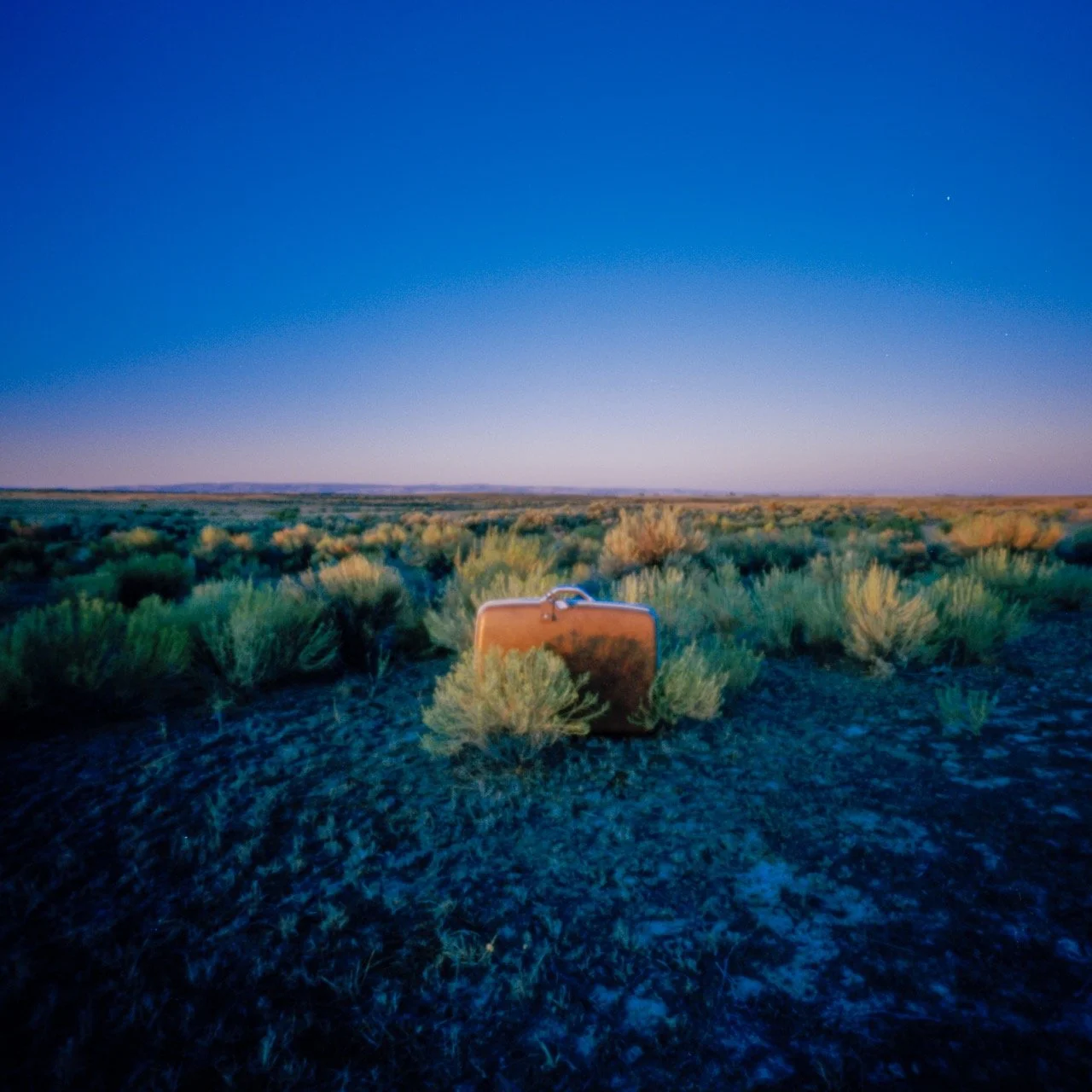
Pinhole photography by Maren in Eden, USA
✽ Where do you go in Kingston to reconnect with yourself?
MH: I love the sea. I love water. I love the walk from Kingston to Richmond by the river. I used to swim in the river, but I stopped now because I'm worried about the quality of the water, even though we now have this defined bathing spot. I love wild swimming. I love swimming but - I don't swim in the winter yet. I'm not that radical, but I do swim in cold water during other times of the year.
✽ Does the feeling of wild swimming translate to your way of filming?
MH: My experience of landscape filming is connected. If you look at my work, photography and film, I do film a lot of seascapes and landscapes, and explore the lives of people who live near them. The actual act of swimming, it's more of a feeling of being outside, in the water or in the air. As a child I spent my summers near the cold Baltic Sea, and swimming was then not such an amazing experience. I think it was getting very quickly wet and running out again. The seascapes and swimming I started doing later, when I wasn't a child anymore.
✽ What was the body of water in the background of the documentary you just screened at KIFF?
MH: The North Sea. I did a class trip when I was 10, we all stayed on one of these little islands, so I'm very connected to the landscape there. I chose it as the location for my film, because I knew it and loved its uniqueness and beauty. I knew it well I thought it would be a place very different to Syria. I wanted to embody the difference between where the refugees in the film came from and where they are now.
✽ How did you adapt to the culture over here from your culture, when you first moved here?
MH: I moved to the UK to study photography, and on the course I was surrounded by international students so at that point I was not really confronted with Britishness per se. I’d lived before that for a year in the US, as an exchange student, when I was 16. I was an exchange student in France when I was 14, for three weeks, and I lived in France with my family for a year when I was 10 due to my stepfather’s work. I traveled around the world for one year before I studied when I was 19, where I met lots of people. On that trip I met somebody from London, who I visited later, and that’s actually how I came to stay here. While I was here, I investigated the courses they offered, which I really liked, I applied to study photography, and that was that.
The real cultural differences between Germany and England I noticed later in very close relationships with people and maybe it’s a stereotype, but it's also true that you're quite honest and straight as a German, and you tell people what you think, which is not necessarily the English way. Which can be perceived as outspoken or rude, or not caring enough. Some difficulties in personal relationships arose, probably with English men in particular. Because you don't package it in a nice way. When English people say what I’d say it is all super nice. As a German, you would probably be a little more direct.
There are benefits to being polite. I'm not knocking it at all. I enjoy that people are very friendly, and generally kind. In Germany, it can feel a little harsh, the way people treat each other. In Germany, you maybe don’t make so many friends, but if you make a friend, it's a friend for life, and they’re very loyal. Whereas in England, or maybe even more in the US, everyone is very nice to everyone, everyone's friends with everyone, but it doesn't always go very deep. Saying that I have some very close English friends I’ve known for a long time.
✽ How do you help to create that exchange when you're shooting?
MH: I always look at people, I don't look through the lens. I set everything up, and I have eye contact with people when I film with them. I look at them when I talk to them, not when they do other things, but when I speak to them, and I think that's really important. You can see it when you watch my films, you can feel the relationship that people have with me. It's important for me as well to portray that in my films.
✽ Can you describe the different relationships you had with the three main women in the documentary?
MH: Batoul, originally from Syria, lives on the North Sea Island. We connect in lots of ways. She studied to a very high level, and she's a big reader and a teacher. She taught Arabic in Syria, which is the most esteemed teacher there in Syria from what I understand, so we can connect on that level. She really appreciated me doing my PhD, she took part in the project because she appreciates education. Even though she comes from a totally different culture, she's also a mother to six children, not just to two like me, but we could connect, a similar age, we have a similar sense of humor. One thing I didn't realize is how much I would laugh. I had so much fun with the refugee women. We had so much fun together. It doesn't come across as much in the film, but we did laugh a lot.
With Samar, I felt an instant connection. She thinks a lot about her situation, reflects a lot about life in Syria, her life here. They're both very religious, but Batoul, even more so. She really knows the Quran and its very important to her, and how much she adheres to Islamic principles, as well. They're all different levels of how people show their beliefs. And she is at the top end. For example, many of the women I filmed with wouldn't drink alcohol, but she wouldn't even be in a place where alcohol is drunk.
Because Nibal doesn't speak much German, I connected with her through Samar. She hasd such a big smile. She seemed so interested in this project, in answering the questions, and thinking about those things. All three of them, I really connected with them, and I don't think it would have been possible in any other way to make that film. It was just me with my small camera with them. I don’t think it would have been possible with anybody else there, crew, translators etc, because it was really was our close relationship that made it possible.
✽ What are your developments in making films about the female experience?
MH: I'm working now on two new projects at the moment. First of all, a project about women and anger, so that's my research project at the moment. I'm working with an animator and musician at the moment. I'm recording women's experiences of anger, if they feel it or not, how it was, and all the cultural expectations of how women are supposed to express anger or not.
For my second film I’m going back to Idaho this summer to complete the Eden Film trilogy. I'm looking for encounters in the tiny community Eden in the wild west between those who are different. I've contacted a lot of people to tell me about encounters they have had, because it's a very conservative community, a very small cowboy town. I don't know what's going to happen yet, or if it's going to work out, but with two projectsI’m taking further the ideas of encounters and the female experience.
✽ When you were younger, was there a first film that ignited your spark to make films.
MH: The first film I remember was The Jungle Book, which I saw when I was five, for the first time in the cinema. I was scared, I was so terribly scared of the snakes, the rolling eyes. I remember it being huge, a massive screen, in a cinema. Obviously I was smaller but it was one of these old cinemas, where people could still smoke,and an ice cream vendor appeared during a break. It was an amazing experience. I didn't think of making films then, but I thought that it was a very powerful experience, and I've loved the cinema since. I've one to the cinema a lot as a child and, as a teenager. I still try now. There's so much stuff online, but it's totally different to view something on the large screen.
✽ What would you say to young makers of today?
MH: I would say to them, it's difficult, especially getting into the film industry. There's no point in saying that it’s easy to make a living as a documentary filmmaker because it isn’t.However, if you manage to get work, and there is work out there it's well paid. It's not like being a fine artist, where you need to get grants to survive. There's a lot of money in the industry, and it may take some time to get in, but it is possible. I've seen many students succeed. You have to stick with it, and in the beginning you have to be prepared to do jobs you didn't initially want to do, to learn about the industry and make connections.
Speak to people. Go to film festivals, Kingston Film Festival, it’s a great place to connect with other people and start collaborating.
About Maren
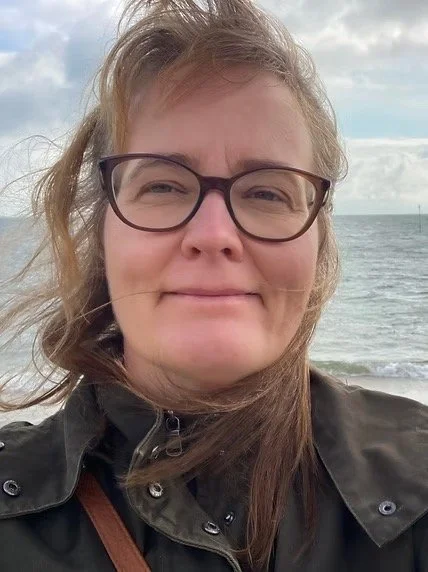
Maren is a award-winning filmmaker who has been living and working in London and Cologne/Hamburg for over 20 years. Maren produced and directed her first films at the BBC before deciding to develop her projects independently. Her films have been screened and exhibited internationally in galleries, on television and at film festivals, most recently at the Frankfurt B3 Biennale, Ann Arbor Film Festival in Michigan and the Toronto Women’s Film Festival. Maren’s work explores the encounter between newcomer and local through personal narratives that reflect social or political change. By revealing the stories that happen when two worlds collide, Maren’s films ultimately question the meaning of home and exile. She has a particular interest in representing the female experience on-screen through immersive projects. Maren works as a senior lecturer at Kingston University and has recently completed a practice-based PhD in Visual Arts at CREAM, University of Westminster with the title: Beyond Home and Exile.
